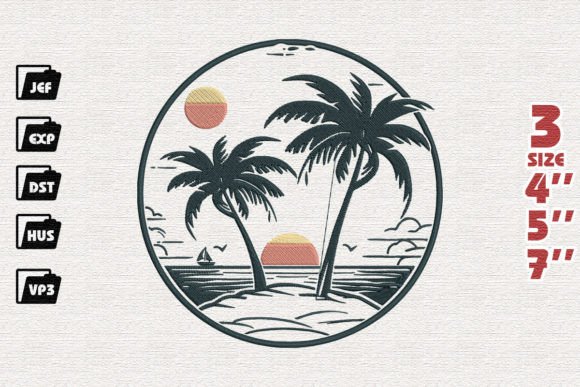
Summer Beach Embroidery Design
First Impression: Bright, Friendly, and Instantly Seasonal
As an embroidery designer who’s prepped over 200 craft fair booths, my gut reaction to Summer Beach is immediate: it reads like sunshine in thread. The name alone signals warmth, relaxation, and approachable nostalgia—no overcomplicated themes, no forced whimsy. It lands somewhere between cheerful modern and soft coastal charm—not overly rustic, not aggressively trendy. That balance is gold for handmade markets, where shoppers scan tables in under three seconds. Summer Beach doesn’t shout, but it *invites*. And that’s exactly what moves product.
Where Summer Beach Shines on Craft Fair Products
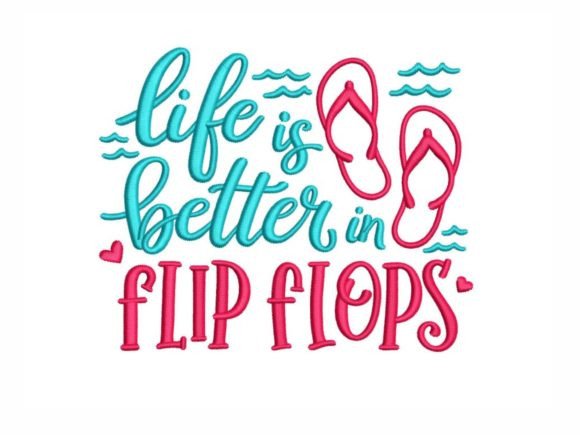
This machine embroidery design thrives where summer energy meets everyday utility. On a natural canvas tote bag? Perfect. Its scale reads clearly from six feet away, and the organic flow of beach-themed elements (think gentle waves, stylized sun, or subtle seashell motifs—even without seeing the full file—aligns with how buyers mentally categorize “summer-ready.”) As an apron embroidery, Summer Beach adds personality without overwhelming function—ideal for food vendors, coffee roasters, or boutique bakers at local markets.
For tea towel embroidery, it holds up beautifully—especially if the design avoids tight clusters of tiny details. A well-balanced Summer Beach layout leaves breathing room around key elements, so stitching stays crisp on textured cotton or linen blends. As a small embroidered patch? Strong potential—but only if the central motif scales cleanly down to 3–4 inches. Patches sell fast at fairs when they’re bold, recognizable, and easy to attach. Same goes for fabric pouches and pillow covers: Summer Beach works best as a centered focal point, not tucked into corners.
On caps? Proceed with care. Curved surfaces demand simplified outlines and generous spacing—so verify whether this embroidery file includes a cap-optimized version. If not, expect some digitizing tweaks before production. For wall art or framed hoop pieces? Summer Beach has quiet elegance—especially when stitched in tonal thread colors on creamy linen. It feels intentional, not generic.
What Makes Summer Beach Sell—And What Slows It Down
Its biggest strength? Summer Beach feels cohesive and ownable. It’s not just another generic sun icon—it suggests a mood, a season, and a lifestyle. That makes it ideal for Etsy sellers building a seasonal collection or small shop owners curating limited-edition summer launches. Buyers don’t just buy a design; they buy the feeling of salt air and slow afternoons—and Summer Beach delivers that without needing explanation.
But practicality matters. If the embroidery file packs dense stitch areas or micro-lettering (e.g., “Summer Beach” arched tightly over a wave), those will blur on dark fabric or thick towels. Tiny details also vanish on curved cap fronts or shrink unpredictably on 3-inch patches. Always test stitch on scrap fabric matching your final product—especially with textured weaves or terry cloth. Stitch density directly impacts durability and drape: too dense = stiff, bulky, un-giftable; too sparse = fragile, prone to snagging.
Booth Impact & Visual Strategy
In a crowded craft fair aisle, Summer Beach stands out through consistency—not clutter. I recommend grouping three hero items: a relaxed-fit linen apron, a heavyweight market tote, and a set of two coordinating tea towels. All feature the same placement and thread palette. That repetition builds subconscious recognition—shoppers start seeing Summer Beach as a *collection*, not isolated items. Add one framed hoop as a booth sample, and you’ve covered tactile, functional, and decorative appeal in under ten square feet.
For printable mockups and Etsy listings, Summer Beach photographs exceptionally well—provided lighting highlights texture and thread sheen. Avoid flat, shadowless studio shots. Instead, style it on a sunlit counter with lemonade glasses or woven baskets. That context tells the story before a single word is read.
Production Notes Every Embroidery Designer Should Check
- Test first: Run a full-size stitch-out on your exact fabric + stabilizer combo—no exceptions.
- Thread contrast matters: Light threads on dark fabric need tighter tension and possibly matte poly for reduced glare.
- Review spacing: Tight lettering or overlapping shapes may require manual digitizing adjustments for clarity.
- Confirm hoop size: Does Summer Beach fit comfortably in your most-used hoops—or does it force frequent re-hooping?
- Stabilizer match: Lightweight designs need tear-away; dense layouts demand cut-away or mesh for stability.
- Create one real mockup: Before batch production, stitch and photograph one finished product—tote, apron, or towel—to validate color harmony and scale.
- Check licensing: Confirm commercial use rights before selling any finished product. This is non-negotiable for Etsy sellers and wholesale partners.
Final Verdict for Creative Entrepreneurs
Summer Beach isn’t just another digital embroidery file—it’s a ready-made seasonal hook for handmade businesses. It bridges online appeal and in-person charm, performs across categories without redesign, and supports both one-off gifts and scalable small-shop production. When executed thoughtfully—with attention to fabric choice, thread selection, and real-world testing—it elevates a simple tote bag into a coveted craft fair product and turns a basic tea towel into a memorable handmade gift.
Just remember: the design’s success hinges less on its file and more on your intentionality. Choose fabrics that let it breathe. Edit thread palettes to suit your brand. Prioritize clarity over complexity. And always—always—stitch a sample before committing to fifty units. Because in the world of handmade markets, Summer Beach doesn’t sell itself. You do. And with this design in your toolkit, you’re already halfway there.