Halloween Zombie Embroidery Design Review
First Impressions: Whimsy with Heart
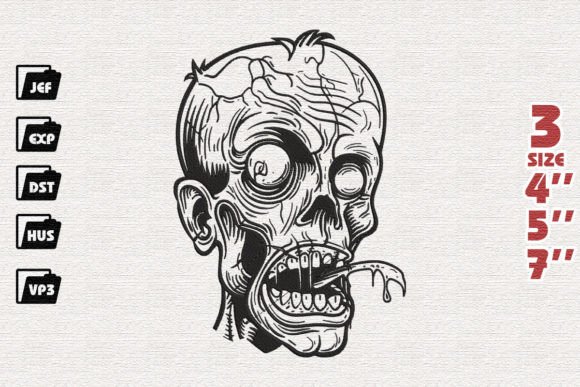
As an embroidery designer who’s stitched over 2,000 custom orders—from newborn baby blankets to heirloom wedding keepsakes—I opened the Halloween Zombie file expecting cartoonish spookiness. Instead, I found something refreshingly warm: a rounded, soft-edged zombie with gentle eyes, a crooked smile, and subtle stitching that reads as handmade—not mass-produced. It’s not scary; it’s sweetly mischievous. The charm lies in its balance: playful enough for a toddler’s apron, refined enough for a linen pillow cover on a modern nursery shelf. This isn’t just a seasonal motif—it’s a personality-driven machine embroidery design that invites emotional connection, especially for customers seeking lighthearted, non-cliché Halloween spirit.
Where Halloween Zombie Shines in Personalized Gifting
This design excels where authenticity and intention matter most. For baby embroidery, it adds gentle whimsy to organic cotton swaddles or muslin lovey squares—no sharp edges, no unsettling shadows, just quiet, cuddly character. As a wedding gift, imagine it stitched in ivory thread on a monogrammed linen napkin set or a “Mr. & Mrs. Zombie” pillow cover for the couple who met at a costume party. It’s perfect for family keepsakes: think a stitched date + “Our First Halloween Together” on a quilt block, or a tiny Halloween Zombie peeking from the corner of a hand-stitched baby blanket.
For small shop owners and Etsy sellers, this is a versatile anchor design. It elevates everyday items into memorable personalized gift offerings: embroidered towels for a haunted house-themed kitchen, custom tote bags for trick-or-treaters, or pillow covers for a cozy fall reading nook. Craft fair vendors can pair it with seasonal fabric bundles—burlap, flannel, or textured linen—to highlight stitch texture. And because it reads clearly at multiple sizes (tested at 3”, 4.5”, and 6”), it works beautifully across product types without losing legibility or charm.
Smart Placement: Where to Use It—and Where to Pause
Like any thoughtful custom embroidery, Halloween Zombie rewards intentionality. It performs beautifully on stable, medium-weight fabrics: cotton poplin for aprons, terry cloth for towels (with tear-away stabilizer), and twill for tote bags. On delicate surfaces—like stretchy bamboo onesies or curved ceramic mugs—it needs careful hooping and reduced stitch density to avoid puckering. Avoid placing it directly over seams or high-flex zones (e.g., elbow patches on jackets) unless you’ve tested the tension thoroughly.
Be mindful on dark fabric: test thread colors first. A light gray or heathered charcoal thread often reads softer and more dimensional than stark white. On thick, looped towels, use cut-away stabilizer underneath *and* topping to keep fine details crisp—especially around the zombie’s expressive eyebrows and stitched mouth. And while the design avoids ultra-fine linework, always check small details post-stitch: eyelashes, tooth gaps, and stitching lines should hold cleanly after washing. If your target products undergo frequent laundering (think baby bibs or kitchen towels), confirm the embroidery file uses balanced underlay and moderate stitch density—no dense fills that’ll stiffen or crack over time.
Why It Builds Trust—and Sales—for Small Businesses
Customers don’t buy embroidery files—they buy confidence, clarity, and care. When a handmade product features Halloween Zombie, it signals thoughtfulness: the seller didn’t grab the loudest design, but one with narrative warmth. That translates directly to perceived value. A customer ordering a personalized baby blanket with this motif isn’t just buying fabric—they’re investing in a story: “My little one’s first Halloween was joyful, not frightening.” That emotional resonance shows up in reviews (“So unique!” “Perfect for our quirky family”), repeat orders, and photo-worthy unboxings.
For product photography, Halloween Zombie is a quiet standout. Its friendly silhouette pops against neutral backdrops, and its soft contrast makes it easy to style—drape it over a pumpkin-spice latte mug, tuck it into a woven basket with mini pumpkins, or lay it beside a handwritten tag. That visual ease boosts buyer engagement, especially for digital-first sellers who rely on scroll-stopping thumbnails. And because it straddles seasons (Halloween through early November), it extends shelf life beyond October 31—ideal for small shop product planning.
Practical Notes Before You Stitch
Before adding Halloween Zombie to your production queue, run these checks:
- Test on scrap fabric—especially if using textured weaves, knits, or blends. Note how the fill stitches settle and whether topstitching stays crisp.
- Confirm hoop size compatibility with your machine and intended product. A 5x7 hoop is ideal for most applications, but verify before digitizing adjustments.
- Review stabilizer strategy: lightweight cut-away for knits, tear-away for stable wovens, and topped + backed for terrycloth or fleece.
- Compare light/dark fabric mockups side-by-side. Some thread palettes shine on cream but mute on navy—adjust accordingly.
- Check small details post-stitch: use magnification to ensure eyes, teeth, and outline continuity hold up after trimming and pressing.
- Verify commercial licensing before selling finished products. Since this is a digital embroidery file, confirm usage rights align with your business model—especially for Etsy listings or wholesale partnerships.
Finally, treat Halloween Zombie like a collaborator—not just a file. Let its tone guide your product pairings, your packaging voice, and even your social captions. It’s more than a machine embroidery design. It’s a conversation starter, a memory marker, and a quietly confident signature for makers who believe personalized gifts should feel human first—and perfectly stitched second.