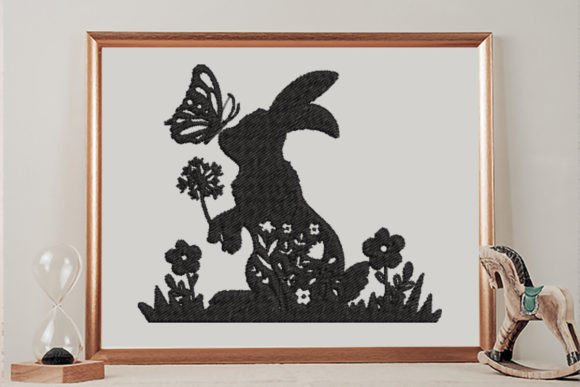
Rabbit Flower Embroidery Design
First Impression: Playful, Polished, and Purpose-Built for Branding
As an embroidery designer who’s developed hundreds of commercial designs for small businesses—from neighborhood bakeries to indie florists and pet-friendly boutiques—I immediately recognize Rabbit Flower as more than a seasonal Easter motif. Its title evokes gentle charm and natural rhythm, while the description confirms its core strength: versatility across merchandise types. It reads professional yet approachable—neither overly whimsical nor stiffly formal. That balance is rare, and critical for brands that want warmth *without* sacrificing polish. Whether you’re stitching for a handmade apothecary or a sustainable café, Rabbit Flower lands as friendly, handmade, and quietly elegant—ideal for businesses leaning into authenticity over loud graphics.
Real-World Business Use: Where Rabbit Flower Shines
This machine embroidery design excels where small business merch needs clarity, consistency, and quiet distinction. On staff aprons? It adds personality without clutter—positioned just above the pocket, it signals care and craft. As a chest logo on work shirts or jackets for a local florist or pet-sitting service, Rabbit Flower reinforces brand identity through subtle storytelling: growth, gentleness, attention to detail. For tote bag design, it scales beautifully near the handle or centered on the front—clean enough to read at arm’s length, detailed enough to invite closer inspection.
As an embroidered patch, Rabbit Flower holds strong visual weight. When sewn onto denim jackets, canvas caps, or woven backpacks, it communicates intention—not just decoration. Boutiques use it as a signature accent on product packaging tags or gift wrap bands; Etsy sellers embed it in printable mockups to showcase their handmade product line with cohesive visual language. And for event merch—think farmers’ market pop-ups or craft fairs—it performs reliably across varied fabric textures and garment shapes, supporting consistent brand recognition even in busy, sunlit settings.
Careful Application: Know Your Limits Before You Hoop
Like any thoughtful embroidery file, Rabbit Flower demands context-aware execution. On curved surfaces—especially cap fronts—test stitch placement early: delicate floral outlines or fine rabbit features may distort if digitized without contour compensation. At very small patch sizes (under 2 inches wide), review spacing and stitch density closely; intricate stems or petals can bleed or lose definition on low-thread-count twill or textured linen. Dark uniforms require high-contrast thread colors—avoid light pastels unless paired with underlay or stabilizer that prevents shadowing.
Frequent-wash items (like kitchen aprons or reusable totes) need extra attention: confirm the design isn’t overly dense, which can stiffen fabric or encourage thread wear. If your version includes fine interior detailing or tight satin-stitch fills, consider simplifying for durability—or opt for a streamlined variant if offered. Always test on the *exact* fabric you’ll use: bouclé, chambray, organic cotton duck, and brushed poly all behave differently under needle and thread.
Brand Identity & Customer Perception: More Than Just Stitches
Every embroidered patch, every apron embroidery, every cap embroidery tells customers something before they read your sign or website. Rabbit Flower subtly elevates perceived value—not by shouting “premium,” but by signaling intentionality. Customers associate clean, well-executed embroidery with care in craftsmanship, which directly supports trust in handmade product lines, local services, and small-batch goods. It strengthens visual consistency across touchpoints: same motif on your tote bag design, your staff uniform, and your product label creates continuity that feels deliberate, not accidental.
For creative studios and Etsy sellers, this design becomes part of your design assets—reinforcing a recognizable aesthetic without locking you into one season. Yes, it fits naturally in Easter collections, but its botanical-rustic tone ensures year-round relevance. That flexibility helps avoid visual fatigue and supports long-term brand equity. Buyers engage more deeply when embroidery feels like an extension of your voice—not generic clip art stitched on.
Practical Designer Notes for Small Business Production
Before launching Rabbit Flower into production, follow these field-tested steps:
- Test in black and white first—this reveals balance, contrast, and legibility issues invisible in color previews.
- Check minimum viable size: embroider a 1.75” version on your target fabric to verify clarity of key elements (e.g., rabbit ear shape, petal separation).
- Review thread color contrast against both light and dark base fabrics—don’t assume digital swatches translate.
- Inspect spacing and underlay: tight curves or layered elements may need adjusted pull compensation for smooth finishes.
- Confirm hoop size compatibility with your machine and frame setup—some versions may require larger hoops for full detail.
- Use appropriate stabilizer: medium-weight cutaway for stretch knits, tear-away for stable wovens, and fusible for lightweight linens.
- Create a physical mockup before client approval—digital proofs rarely capture texture, drape, or stitch sheen accurately.
- Compare beside existing design assets: does Rabbit Flower harmonize with your logo, typography, and other embroidery files?
- Verify commercial licensing before using on resale merchandise—this is non-negotiable for custom apparel, branded patches, or wholesale product labels.
Finally, remember: the strength of any digital embroidery file lies not just in its artistry—but in how thoughtfully it serves your business goals. Rabbit Flower doesn’t demand attention; it earns it—through consistency, clarity, and quiet confidence. Used intentionally, it becomes more than a machine embroidery design. It becomes part of your story.